

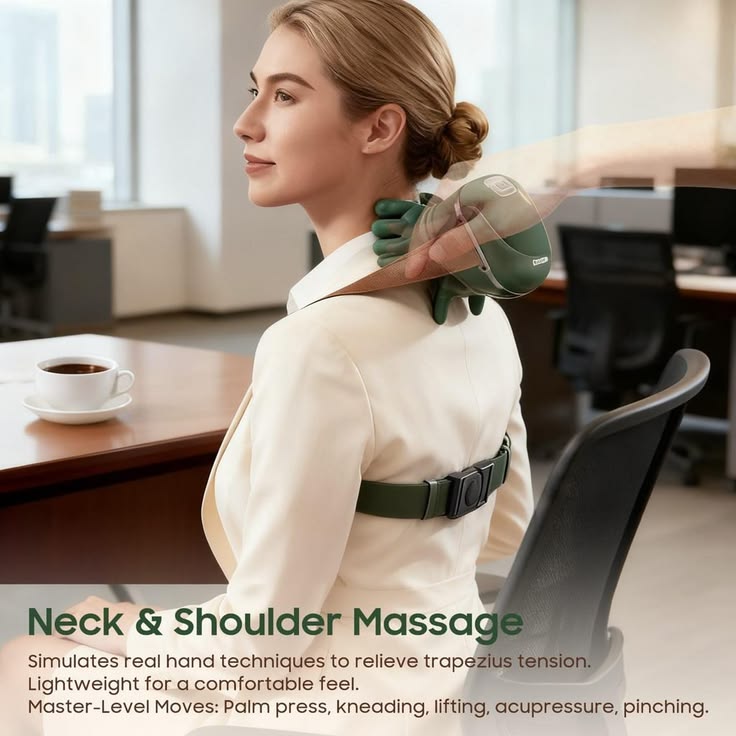
Deep tissue massage is often described as “intense,” but its real value lies in precision rather than force. The goal is not simply to press harder into muscles, but to reach specific layers of tissue where chronic tension and knots develop. Among all upper-body muscles, the trapezius is one of the most commonly affected—and one of the most responsive to targeted deep tissue techniques.
Modern precision massagers are designed to replicate this focused approach using controlled pressure, rhythmic kneading, and ergonomic alignment. When used correctly, they can help reduce stiffness, improve circulation, and restore mobility in the Neck and Shoulder Massager region.
Understanding the Trapezius Muscle
The trapezius is a large, triangular muscle that spans the upper back, shoulders, and neck. It plays a key role in posture, head movement, and shoulder stability.
Why It Tenses So Easily
The trapezius is highly active throughout the day, even during static activities like sitting. It is especially prone to tension due to:
- Long hours of desk work
- Forward head posture
- Emotional stress and muscle guarding
- Carrying weight on the shoulders
Because it is constantly engaged, it is one of the first muscles to develop chronic tightness.
What Deep Tissue Massage Actually Does
Deep tissue massage focuses on reaching deeper layers of muscle and connective tissue rather than just the surface level.
Breaking Down Muscle Resistance
When muscles stay contracted for long periods, they form tight bands and restricted areas. Deep pressure helps:
- Loosen contracted muscle fibers
- Reduce stiffness in deeper tissue layers
- Restore normal muscle length
Improving Local Circulation
Pressure and release cycles increase blood flow to tight areas, which helps deliver oxygen and nutrients while removing waste products.
Resetting Muscle Memory
Repeated tension can cause muscles to stay in a semi-contracted state. Deep tissue work helps “retrain” the muscle to relax more naturally.
How Precision Massagers Target the Trapezius
Modern massagers are engineered to apply controlled, repeatable pressure directly to key muscle zones.
1. Ergonomic Alignment with Shoulder Contours
Precision devices are shaped to follow the natural curve of the neck and shoulders. This ensures that massage nodes align with the trapezius muscle rather than missing or sliding over it.
2. Controlled Depth Pressure
Instead of random force, advanced systems apply adjustable pressure depth. This allows the device to reach:
- Superficial muscle layers for relaxation
- Deeper layers for chronic tension release
3. Multi-Directional Kneading
Human muscles do not respond best to single-direction pressure. Precision massagers use rotating and shifting motion patterns to:
- Stretch fibers from multiple angles
- Prevent muscle adaptation
- Increase effectiveness on stubborn knots
4. Rhythmic Variation
Alternating pressure cycles help the muscle relax between deep compressions. This prevents overstimulation and improves comfort during longer sessions.
The Role of Precision in Pain Relief
Deep tissue work is most effective when applied accurately. Random or uneven pressure can reduce results or create discomfort.
Targeted Pressure vs General Force
Precision massagers focus force on specific trigger points within the trapezius rather than applying broad, unfocused pressure. This improves:
- Efficiency of muscle release
- Comfort during use
- Long-term effectiveness
Heat and Deep Tissue Synergy
Heat therapy is often combined with deep tissue massage to enhance results.
Why Heat Matters
Warm muscles respond more effectively to pressure because:
- Tissue becomes more flexible
- Blood flow increases
- Resistance to massage decreases
When combined with kneading, heat allows deeper penetration without excessive force.
Common Trapezius Problem Areas
The trapezius is not uniform in how it holds tension. Different regions develop different types of discomfort.
Upper Trapezius
Located near the neck and shoulders, this area often becomes tight due to posture strain and stress.
Mid Trapezius
This region can stiffen from prolonged sitting and lack of movement.
Shoulder Junction Points
Where the neck meets the shoulders, trigger points often form that can cause referred pain.
How Precision Massage Improves Mobility
Releasing trapezius tension has a direct impact on movement and posture.
Improved Neck Rotation
Looser muscles allow smoother head movement without stiffness.
Reduced Shoulder Elevation Tension
Relaxed trapezius muscles reduce the tendency to “hold tension” in the shoulders.
Better Postural Alignment
When muscles are less tight, the body can return more easily to a neutral posture.
Why Consistency Matters More Than Intensity
Deep tissue massage is most effective when done regularly at moderate intensity rather than occasionally at high intensity.
Benefits of Regular Use
- Gradual reduction in chronic tightness
- Improved muscle responsiveness
- Reduced recurrence of knots
Over time, consistency helps reshape how the muscle behaves under daily stress.
Common Mistakes in Deep Tissue Massage
Even with advanced devices, improper use can reduce effectiveness.
Using Excessive Pressure Too Soon
This can cause muscles to contract defensively instead of relaxing.
Ignoring Ergonomic Positioning
Poor alignment reduces contact with key trapezius areas.
Overuse in One Session
Long sessions may lead to temporary soreness without additional benefit.
Supporting Deep Tissue Results
Massage works best when combined with supportive habits.
Posture Awareness
Reducing forward head posture helps prevent re-tightening.
Regular Movement
Stretching and mobility breaks support circulation.
Stress Management
Lowering emotional tension reduces unconscious shoulder tightening.
Final Thoughts
The science of deep tissue massage is built on precision, not force. When applied correctly, targeted massagers can effectively address chronic trapezius tension by improving circulation, releasing tight fibers, and restoring natural muscle balance.
While they are not a replacement for professional therapy in all cases, they offer a highly effective way to manage everyday shoulder and neck strain. With consistent use and proper technique, precision massagers can play a key role in improving comfort, mobility, and long-term muscle health in the upper body.