

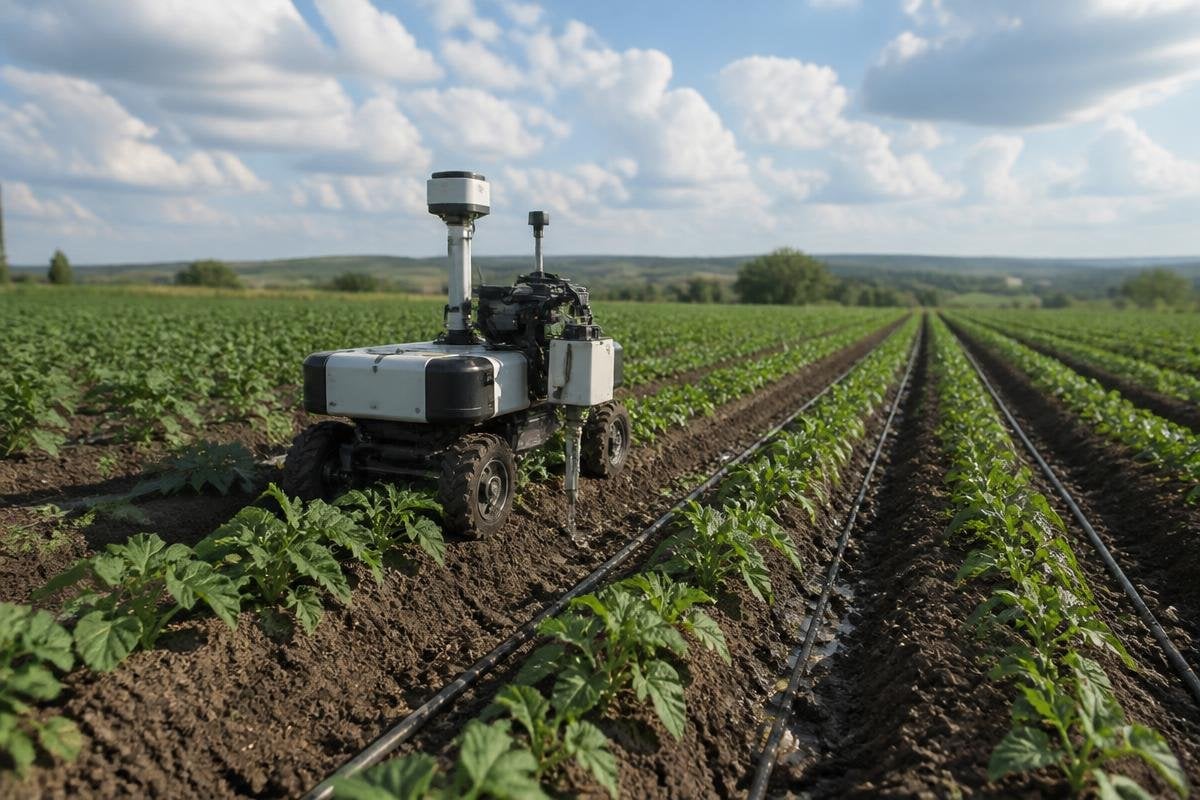
A farm robot can test soil, read plant leaves, and send water only where crops need it. That changes irrigation from a blanket job into a row-by-row decision, but the robot still needs good field data and a clear watering plan.
- Soil-moisture probes show where the ground is dry
- Cameras can find plant stress before people see it
- Targeted watering can avoid wetting bare soil
What the robot measures
The useful part of a farm robot is its sensor package. A soil-moisture probe checks how much water sits in the root zone, where crops can reach it.
A camera records plant color and shape, while a multispectral camera reads bands of light outside normal human vision. Those readings answer different questions. Soil data shows what is happening below the surface. Camera data shows how the crop looks above it.
A robot that uses both can compare dry ground with plants that show signs of stress, instead of treating every part of a field in the same way. Position tracking can use GPS or real-time kinematic GPS, known as RTK-GPS.
RTK-GPS gives the system a fixed location for each reading, so a farmer can return to the same patch and check whether the soil and plants have changed.
How targeted watering works
On set paths between crop rows, the robot links each sensor reading to a location, then builds a map of dry and wet areas. That map can guide a later irrigation run or tell a worker where to check by hand.
Some systems can carry a small water tank and apply water through a hose or nozzle. Others only measure the field and send their findings to an irrigation controller. The second type can still cut waste because the watering system gets a better map of where water belongs.
Targeted watering matters most where fields contain different soil types, slopes, or patches of weaker growth. A single timer may water the whole area for the driest spot. A location-based plan can give that spot more water while reducing flow elsewhere.
Farmers also need to account for weather, crop type, root depth, and the water already in the soil. A robot cannot decide the right amount from one camera image. The useful decision comes from repeated readings tied to the crop stage and the field plan.
Where the savings can fail
Sensors need contact with the soil or a clear view of the plants. Dust, mud, shade, crop height, and changing sunlight can affect readings. A camera may see a pale leaf, but that color change can come from disease, nutrients, heat, or a lack of water.
Safe access matters too. Wet ground can limit movement, while narrow rows can leave little space for wheels or a larger chassis. If the machine damages plants or compacts soil, its water work creates a different farm problem.
The farm still needs people to check the findings. A sensor map can point to a dry area, but irrigation lines, blocked emitters, and field conditions may explain the reading.
Water savings should be measured from pump use, flow meters, or irrigation records rather than assumed from a colorful map.
A field robot should earn its place in an irrigation plan by showing lower water use in a real crop row. Compare its claim with pump records, flow data, and the area it treated; Robot24 can give you named machines and reported tests to check before you compare costs.
A practical buying check
Before choosing a robot or sensor system, check these points:
- Field fit: Confirm the robot can pass through your row width and handle the field surface.
- Sensor depth: Check whether the probe measures the root zone used by your crop.
- Location accuracy: Ask how the system marks each reading and whether RTK-GPS is needed.
- Water control: Find out if it only creates maps or can send commands to irrigation equipment.
- Data access: Make sure you can export readings and compare them with flow or pump records.
- Human checks: Set a routine for inspecting flagged areas before changing the watering plan.
I’d start with measurement before buying a robot that moves water. A sensor cart or small scouting robot can show where the field loses water, while a full irrigation machine adds cost, maintenance, and more ways for bad data to affect a crop.
The next useful test is local: compare the robot’s soil map with probe readings and water records from the same field. If those records agree across one growing season, the farmer has a basis for changing irrigation area by area instead of guessing from the driest patch.